Trigger vs. Shift Alerts: Which One Do You Actually Want?
The one choice in the criteria builder that confuses everyone. Triggers fire at a fixed number; shifts fire on movement. Here's how to pick, with examples.
Every alert in Momentum Bets is one of two kinds. A trigger fires when a number crosses a line you drew in advance. A shift fires when a number moves by an amount you chose, wherever it happens to be. Same form, one dropdown apart, completely different questions. Picking the wrong one is the most common way a new alert ends up too noisy or too quiet.
Triggers: "tell me when it gets here"
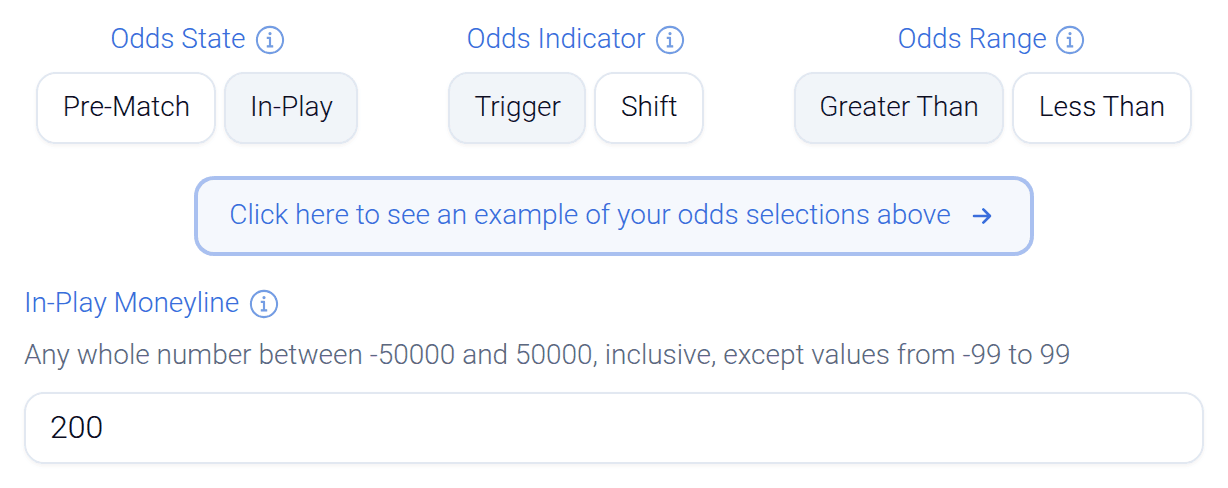
A trigger is a tripwire at a fixed number. You know the price you care about before the game does:
- Moneyline goes longer than +200.
- The total drops below 44.
- The spread reaches +7.5.
You pick the direction - greater than or less than - and the value. The market touches it, your phone buzzes, done. If you already have a number in your head, you want a trigger. Most first alerts should be triggers, honestly, because "the price I've been waiting for" is the thing most people want to know about.
Shifts: "tell me when it moves"
A shift doesn't care where the number is. It cares how far it's traveled. "The total moved a full point." "The line jumped." You're not waiting for a specific price - you're asking to hear about movement itself, because movement is information. Why a line moves at all is its own story, but the short version: numbers move when money or news shows up, and a shift alert is how you find out without staring at the board.
Shifts come in two flavors, depending on the odds state you picked:
- Pre-match shift - fires when the line moves by your amount before the game starts. One value to set: the size of the move.
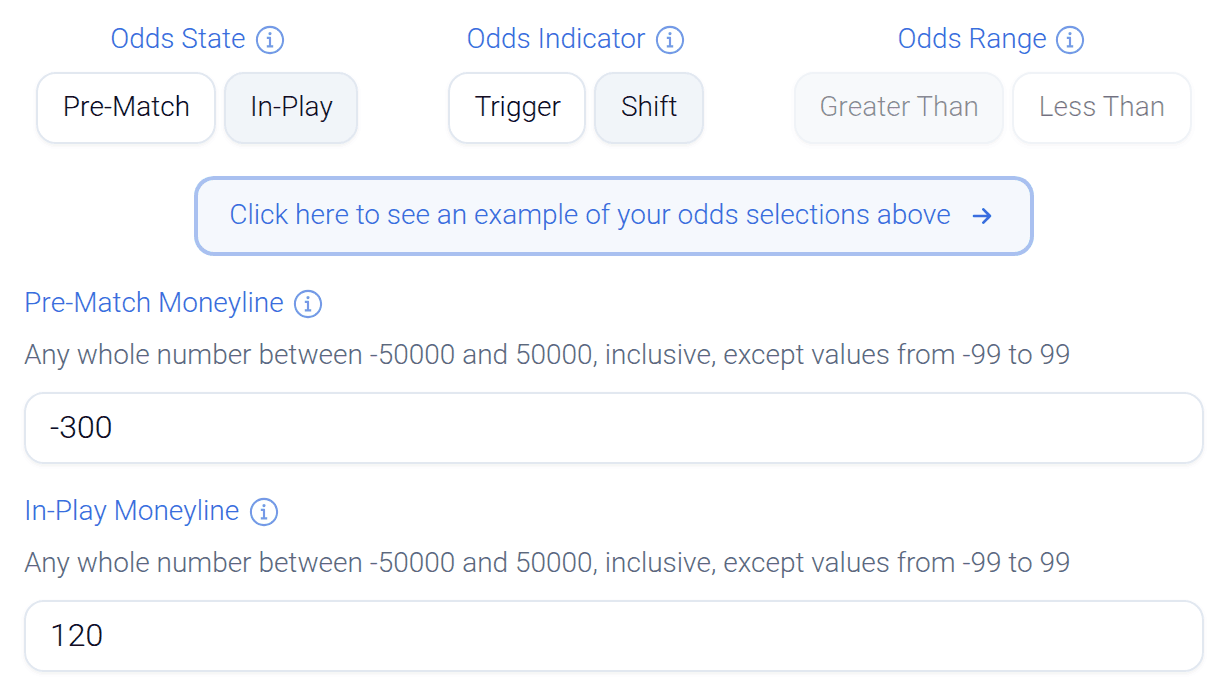
- In-play shift - measures live movement against a pre-match reference point. Two values to set: the pre-match line you're anchoring to, and the live threshold that fires the alert. "They closed -300, tell me if the live price blows past +120" is an in-play shift.
The same situation, both ways
Say you follow NBA totals. A trigger says: "alert me when tonight's total hits 235." You'll hear about it if it gets there, and hear nothing if it stalls at 234.5 - even though that half-point crawl from 228 might have been the interesting part. A shift says: "alert me when any total I follow moves 3 points." Now you hear about the crawl, on any game, at any number - but you'll also hear about moves you don't care about. Precision versus coverage. That's the whole trade.
Trigger when you know the price. Shift when you want the news.
Which should you pick?
- You've been waiting for a specific number: trigger.
- You want to know when the market gets active: shift.
- You want live prices measured against the close: in-play shift.
- Genuinely unsure: start with a trigger. It's easier to reason about, and you can always add a shift alongside it later - alerts aren't either/or.
Ready to put one together? The step-by-step setup guide builds a trigger from scratch, and the starter alerts include working examples of both kinds.